Parking lot and site lighting: summer-ready retrofits that boost safety and cut spend
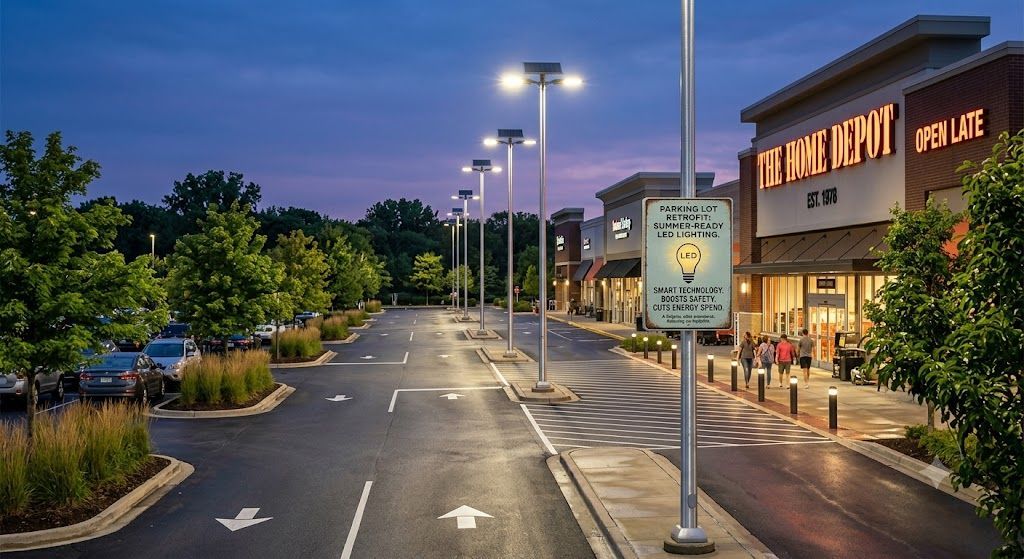
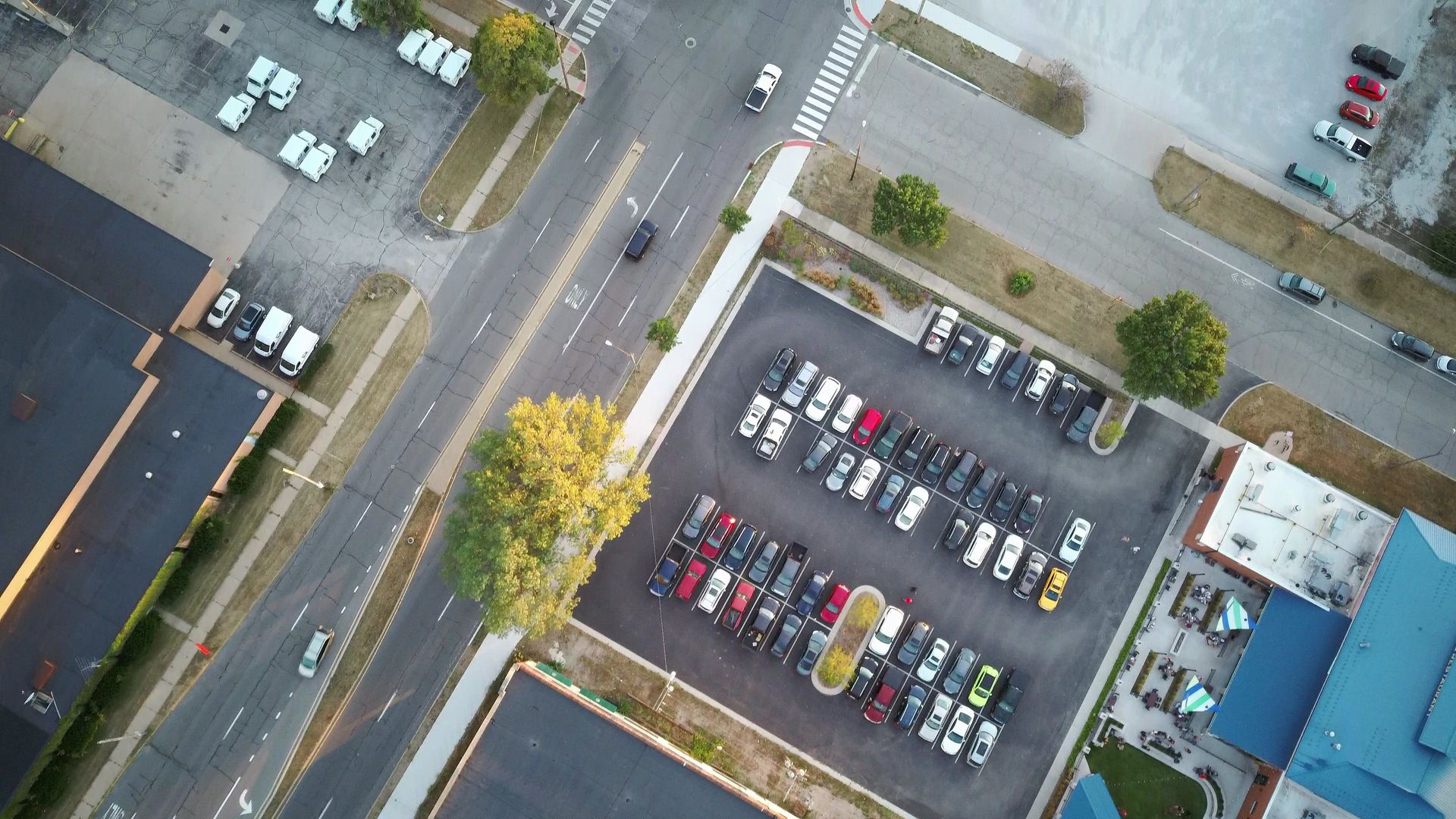
Longer daylight and busier evenings make summer the right moment to tune up your exterior lighting. If your parking lot is still running high-pressure sodium or metal halide lamps, you are likely overspending on energy and maintenance while fighting glare, dark spots, and camera washout.
This guide walks property and facility managers through a practical retrofit path to LED. You will see how to use the right optics and color temperature, add smart controls that trim after-hours kWh, and plan an installation with minimal disruption. We close with a quick scenario from a Chicagoland retail lot to make the ideas concrete.
Why retrofit HID lots and sites to LED
HID technologies like high-pressure sodium (HPS) and metal halide were the standard for years, but LEDs typically cut energy use by 40 to 70 percent depending on wattage, optics, and controls. A 400 W metal halide shoebox that draws around 455 W with ballast can usually be replaced by a 150 to 200 W LED area light while maintaining or improving visibility. With motion dimming and nighttime scheduling, many sites see additional savings on top of the fixture efficiency.
Maintenance drops significantly because quality LED fixtures offer long lifespans with L70 ratings of 50,000 to 100,000 hours. That means fewer bucket truck trips, fewer lamp and ballast changes, and less downtime in busy seasons. LEDs are instant-on in any temperature, so you avoid restrike delays after power blips and you can confidently use sensors.
From a safety and security standpoint, LEDs improve uniformity and color rendering, which helps drivers, pedestrians, and cameras see detail. That improved clarity supports monitoring and shortens the time it takes eyes and lenses to adapt when moving from brighter to darker areas.
A retrofit path that works
Most exterior upgrades follow a straightforward path from HID to LED:
- Pole-mounted area lights: Replace shoebox heads with new LED area fixtures or use pole light retrofit kits when the existing housing is sound.
- Wall packs: Swap to full-cutoff LED wall packs for perimeter and facade lighting, or use wall pack retrofit kits where the housing must remain.
- Canopy lights: Convert under-canopy HIDs at entries and drive-throughs to LED canopy fixtures with sealed optics and glare control.
- Flood and sign lights: Replace asymmetrical floods and sign lamps with LED floods matched to throw distance and tilt.
In many cases you can retrofit existing poles and heads instead of full replacement. A site audit will confirm pole condition, bracket compatibility, wiring state, and whether the existing housing supports safe thermal performance for a kit. Where housings are corroded, gaskets have failed, or optics are outdated, full fixture replacement is the safer and often more energy-efficient choice.
If you manage properties in the Fox Valley, our team supports audits, specification, and installation coordination. For help right away, you can connect with commercial lighting contractors in North Aurora through our main page, or explore Aurora LED lighting resources if your portfolio includes properties next door.
Choose CCT and optics that improve visibility without glare
- Color temperature and beam distribution drive both comfort and safety.
- Color temperature: For residential-adjacent or mixed-use properties, 3000K to 4000K keeps a warm to neutral appearance that limits perceived glare and neighborhood complaints. For retail centers, industrial sites, or busy arterials, 4000K to 5000K enhances contrast and camera clarity. Many campuses standardize on 4000K for a balanced look across zones.
- Optics and distribution: The goal is uniform coverage with minimal hot spots and dark patches. Use Type III or Type IV optics to push light forward for perimeter rows, and Type V for central poles where 360-degree symmetry is needed. Proper tilt and mounting height matter as much as fixture wattage. When optics are matched to spacing, you often step down wattage and still gain visibility because uniformity improves.
Glare control matters for drivers and cameras. Favor fixtures with diffusing lenses or cut-off shields where sightlines are critical. Avoid tilting floods too high; even small angle changes can create veiling luminance for drivers and produce halo artifacts in CCTV.
Controls that lower costs while supporting safety
- Motion sensors, scheduling, and dimming are the backbone of after-hours savings. The winning combination is simple:
- Scheduling: Set baseline on times to match operating hours, then dim to a late-night level rather than switching off. Many properties hold at 30 to 50 percent after closing, then step back up before opening.
- Motion sensing: Use integral or pole-mounted sensors to bring zones to full output only when activity is detected. Zoning reduces false triggers and avoids lighting the entire lot for one vehicle.
- Dimming: Pair 0 to 10 V dimming or networked controls so fixtures ramp smoothly. Soft transitions reduce nuisance to neighbors and help cameras maintain exposure.
These strategies often trim another 20 to 40 percent of kWh beyond the fixture swap, depending on hours and traffic patterns. Commissioning is key. We tune timeouts, sensitivity, and grouping so areas near entries remain inviting while remote edges save aggressively. If you are adding controls to multiple sites, our team can help you plan, supply, and install lighting controls in North Aurora with documentation for operators.
Camera compatibility and site security
CCTV performance improves when vertical illumination and uniformity are prioritized. Choose a consistent CCT across the site, avoid mixed spectra near entrances, and keep minimum light levels steady so automatic exposure in cameras does not hunt. Shield or select low-glare optics near cameras to prevent lens flare. If you use analytics for license plates or people detection, keep contrast reliable by limiting hot spots near poles and bright signs.
Mini scenario: Chicagoland retail lot
A suburban retail center west of Chicago ran 400 W metal halide shoeboxes on 25-foot poles with several wall packs along the storefronts. The property team faced frequent lamp changes, color shift, and dark corners that frustrated tenants.
After an audit, the plan specified 150 W LED area lights with Type III optics on perimeter poles and Type V in the center rows, standardized at 4000K. Full-cutoff LED wall packs replaced the storefront HIDs. Integral motion sensors were grouped by aisle, with schedules dimming to 40 percent from 11 p.m. to 5 a.m. The loading dock canopy received sealed LED canopy lights rated for weather and washdown.
Results included roughly 55 percent energy reduction at the fixtures, plus an additional 25 percent cut from nighttime dimming and motion. Uniformity improved, eliminating bright rings under poles and dark gaps between them. The security vendor reported cleaner camera footage with fewer washed frames. Maintenance calls dropped to almost zero in the first year.
If your portfolio includes nearby properties, you can review DLC-listed HID-to-LED replacement guidance for Aurora projects, including rebate considerations. Our local team also supports tenants who ask about Aurora LED bulbs for quick interior swaps.
Installation with minimal disruption
Illinois Lighting coordinates installation around store hours and traffic. Typical measures include:
- Phased work zones that keep primary drives open.
- Night or early morning pole work scheduled to avoid peak parking.
- Pre-staged lifts, fixtures, and hardware to shorten on-site time.
- Commissioning after dark so aiming, dimming, and sensor zones are verified under real conditions.
As an independent distributor and project manager, we align product lead times with your calendar, collaborate with your electrical contractor, and remain available for adjustments after go-live. That is how we keep upgrades easy from start to finish.
FAQ
- What are the advantages of retrofitting HID parking lot lights to LED? Expect big energy savings, better uniformity and color rendering, instant-on performance, and far less maintenance. LEDs also support advanced controls that HIDs cannot handle well.
- Which CCT and optics reduce glare and improve visibility? Use 3000K to 4000K for residential-adjacent sites and 4000K to 5000K for retail or industrial. Match optics to layout, typically Type III or IV on perimeters and Type V in central rows, and favor full-cutoff or shielded designs to limit glare.
- How do motion sensors and schedules lower costs? They dim lights when areas are inactive, then raise levels on demand. Combined with time-based dimming after hours, this often stacks an extra 20 to 40 percent savings beyond the fixture swap.
- Can we retrofit existing poles and heads instead of full replacement? Yes, if poles, brackets, and housings are structurally sound and thermally suitable. Otherwise, full fixture replacements are safer and often deliver better uniformity and efficiency.
- How does Illinois Lighting handle installation with minimal disruption? We phase work, schedule off-hours, pre-stage materials, coordinate with your team, and commission settings after dark so the site looks right on night one.
Next steps
Summer sets the tone for the rest of the year. If you want a safer, brighter lot that costs less to run, we can help you plan the right mix of LED fixtures, optics, and controls, then manage a smooth install. For local support, start with our North Aurora page for north aurora LED lights and retrofit services, or connect with commercial lighting contractors in Aurora if your properties span both cities. You can also reach our team at 630-844-5060 or
info@illinoislighting.com to request a free estimate and a quick controls plan tailored to your site.